
Publicaciones Científicas en Cardiología y Electrofisiología Dr. Jorge Marín
El Dr. Jorge Marín ha participado en múltiples publicaciones científicas en cardiología y electrofisiología, abordando arritmias cardíacas, ablación y dispositivos cardíacos.
El Dr. Jorge Marín ha desarrollado una activa participación en el ámbito académico mediante la publicación de artículos científicos en cardiología y electrofisiología cardíaca.
Sus investigaciones se han centrado en el estudio y tratamiento de las arritmias cardíacas, incluyendo técnicas avanzadas como la ablación cardíaca, el uso de dispositivos implantables y la electrofisiología intervencionista.
Estas contribuciones reflejan su compromiso con la medicina basada en la evidencia y la innovación en el tratamiento de enfermedades cardiovasculares.
Device Infection Using Chlorhexidine Irrigation vs an Antibacterial Envelope: A Propensity Score–Matched Analysis
Cardiac implantable electronic device (CIED) infection represents a significant cause of morbidity and increased health care costs in patients undergoing high-risk procedures.
Jorge Eduardo Marin, Carlos Tapias, David Santacruz-Pacheco, Diego Rojas, Alejandro Olaya, Santiago Giraldo, William Bautista, Luis Carlos Saenz, Jaime F. Rosas-Andrade, Víctor Manuel Velasco, Juan Felipe Betancourt-Rodríguez, Juan Manuel Camargo-Ballestas, Andres Mosquera, Sara Florez, Julian Miguel Aristizabal, Cesar Daniel Nino, Mauricio Duque, Luis Miguel Ruiz, Oriana Bastidas, Juan Carlos Diaz.
Background
Objective
This study sought to describe the incidence of infection using two prevention strategies: chlorhexidine gluconate (CHG) pocket irrigation vs antibacterial envelope (ABE).
Date: 23 March 2026
Current state of arrhythmia care in Latin America: A statement from the Latin American Heart Rhythm Society
Latin America is a region that stretches from Mexico to Tierra del Fuego in Argentina and includes much of the Caribbean, with an estimated population of more than 652 million1 and a combined gross domestic product (GDP) of US$5,188,250 trillion.2,3 Arrhythmia care in Latin America has significant variability due to differences in country-specific health care issues, available resources and workforce, and access to medications and technology. In 2022, the Latin American Heart Rhythm Society (LAHRS) began collecting annual information on arrhythmia-related disease burden, availability of specialized therapies for arrhythmias and cardiac implantable electronic devices (CIEDs), and workforce information. The information obtained was presented at a societal meeting held during the 2023 Heart Rhythm Society (HRS) Congress. Herein, we report the final conclusions from the meeting.
Ulises Rojel, MD, FHRS, LAHRS Co-Chair, Juan C. Diaz, MD, Marcio Jansen de Oliveira Figueiredo, MD, LAHRS Co-Chair, Luigi Di Biase, MD, FHRS, HRS Co-Chair, Eduardo Saad, MD, FHRS, HRS Co-Chair Luis Aguinaga-Arrascue, MD, Floreal Cueto, MD, Juan Cruz Lopez Diez, MD Remberto Torres-Molina, MD, Cristiano F. Pisani, MD, Fátima Dumas Cintra, MD, Luis Quininir, MD, Armando Pérez-Silva, MD, PhD, Jorge Marin, MD, Federico Malavassi, MD, Elibet Chavez-Gonzalez, MD, Fernando A. Vidal-Bett, MD, Eliany Mejia-Lopez, MD, Jose Llorente, MD, Jorge Arbaiza, MD, Martha Reyes, MD, Gerardo Rodríguez-Diez, MD, Eric Karabut, MD, Richard Soto-Becerra, MD, Ricardo Zegarra, MD, Ana Cecilia Gonzales Luna, MD, Daniel Banina, MD, Alejandro Cuesta, MD, Chamia Benchetrit, MD, Heliodoro Rodriguez, MD, Nestor Lopez-Cabanillas, MD, LAHRS Co-Chair.
Introduction
Date: January 2025
Left bundle branch area pacing versus endocardial resynchronization in patients with heart failure
Left bundle branch area pacing (LBBAP) and endocardial resynchronization (Endo-CRT) are alternatives to biventricular pacing for cardiac resynchronization therapy (CRT).
Juan Carlos Diaz, MD; Oriana Bastidas, MD; Julian Aristizabal, MD; Jorge Marin, MD; Cesar Niño, MD; Sebastian Moreno, MD; Luis Miguel Ruiz, MD; Manuel Caceres, MD; Elmer Jaraba, MD; Nestor Cabanillas, MD; Mauricio Duque, MD;
Background
Objective
To compare the outcomes of LBBAP versus Endo-CRT using conventional pacing leads.
Date: 07 November 2024
Improved All-Cause Mortality with Left Bundle Branch Area Pacing Compared to Biventricular Pacing in Cardiac Resynchronization Therapy: A Meta-Analysis.
Left bundle branch area pacing (LBBAP) has emerged as a physiological alternative pacing strategy to biventricular pacing (BIVP) in cardiac resynchronization therapy (CRT). We aimed to assess the impact of LBBAP vs. BIVP on all-cause mortality and heart failure (HF)-related hospitalization in patients undergoing CRT.
Juan Carlos Diaz; Mohamed Gabr; Usha B Tedrow; Mauricio Duque; Julian Aristizabal; Jorge Marin; Cesar Niño; Oriana Bastidas; Bruce A Koplan; Carolina Hoyos; Carlos D Matos; Daniela Hincapie; Kevin Pacheco-Barrios; Isabella Alviz; Nathaniel A Steiger; Sunil Kapur; Thomas M Tadros; Paul C Zei; William H Sauer; Jorge E Romero.
Background
Methods
Studies comparing LBBAP and BIVP for CRT in patients with HF with reduced left ventricular ejection fraction (LVEF) were included. The coprimary outcomes were all-cause mortality and HF-related hospitalization. Secondary outcomes included procedural and fluoroscopy time, change in QRS duration, and change in LVEF.
Date: 26 April 2024
An unexpected germ: atypical presentation of Vagococcus fluvialis pocket infection in a cardiac pacing device
Advances in cardiac implantable electronic devices (CIED) technology have enabled them to play a relevant role in heart disease. Although complications have decreased, CIED-related infection persists as one of the problems that has the greatest impact on the patient and the health system. Infections due to unusual germs generate additional morbidity and increased costs of care but can have a favorable course with early diagnosis and treatment. The case of a patient with clinical signs and symptoms of CIED pocket infection by Vagococcus fluvialis, without systemic infection or endocarditis, is presented for the first time in the literature. Timely treatment allowed a favorable evolution. New diagnostic and therapeutic challenges come from the hand of more complex patients.
Jorge-Eduardo Marin-Velasquez, Juanita Velásquez, Jorge-Enrique Sotelo-Narvaez, Julian-Miguel Aristizabal-Aristizabal, Juan-Carlos Diaz-Martinez, Mauricio Duque-Ramirez.
Abstract
Introduction
Advances in cardiac implantable electronic devices (CIED) technology have enabled them to play a relevant role in complex diseases such as heart failure or sudden arrhythmic death. Although complications have decreased, CIED-related infection persists as one of the problems that has the greatest impact on the patient and the health system.
Antibiotic prophylaxis has consistently reduced infection rates and is a settled recommendation. However, various series report current infection rates close to 1-2%. The causative agents are usually Staphylococcus aureus and Staphylococcus epidermidis (or another coagulase-negative). Other infectious microorganisms such as Enterococcus, Streptococcus, Candida, etc. have also been reported. Atypical microorganisms, such as Vagococcus fluvialis, have a different clinical course, from slowly developing infections to rapidly progressive courses.
Date: March 2024
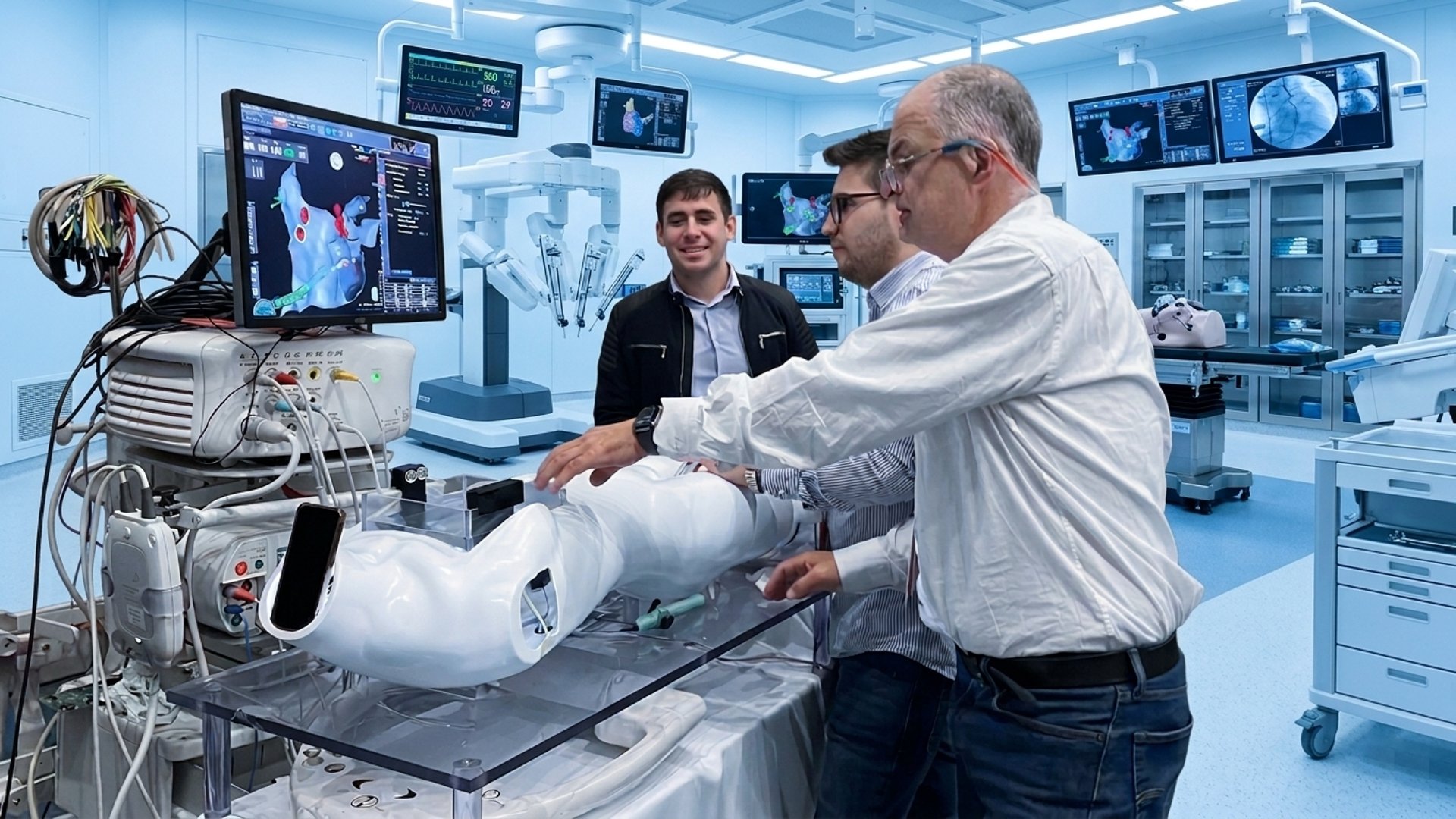
Consulta con especialista en arritmias cardíacas en Medellín
Si presentas síntomas como palpitaciones, latidos irregulares o mareo, es importante contar con una evaluación especializada en electrofisiología cardíaca